Subscription Based Social Media
User Research
2024

Overview
As digital platforms face increasing operational costs, many are shifting from ad-based to subscription-based revenue models. However, this transition often reduces access to essential features for free users while failing to fully address user experience concerns. A critical challenge lies in balancing revenue generation with user satisfaction, particularly as rising ad frequency has been shown to decrease ad relevancy—ultimately diminishing the quality of advertisements and negatively impacting user engagement and purchasing decisions. This research aims to explore the relationship between ad frequency, relevancy, and user behavior to provide actionable design implications. By understanding how ad saturation affects perceived value and purchase intent, the study seeks to inform the development of subscription models that enhance user experience, maintain platform engagement, and support sustainable monetization.
Results
Rising ad frequency has diminished ad relevancy, adversely affecting advertisement quality. While relevant ads enhance engagement and drive purchases, irrelevant ads degrade the user experience.
User Research
Why Subscriptions?


Why Subscription?
With rising costs to operate large-scale internet businesses, many companies are shifting to subscription models promising ad-free experiences and exclusive features. However, this often comes at the expense of removing key functionalities behind paywalls.
At what cost?
YouTube’s removal of the “add to queue” feature for mobile users and Spotify’s restriction on song skips per hour highlight a growing trend: essential features are increasingly locked behind paywalls. While these platforms remain technically free, the combination of limited functionality and constant ad interruptions significantly diminishes usability, pressuring users toward paid subscriptions.
Problem Statement
But first, lets look at the
Evolution of Online Advertising
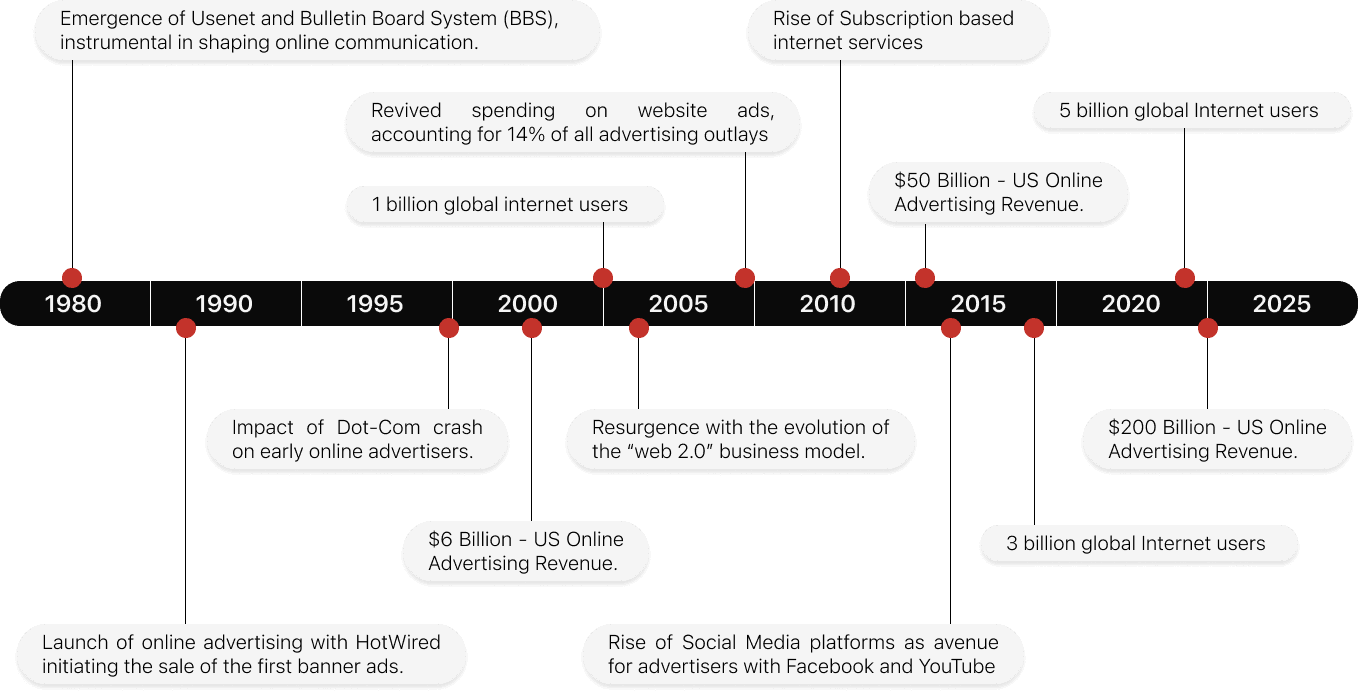
Online advertising has been instrumental in shaping the modern internet, enabling platforms to offer free services while generating substantial revenue. It has fueled the growth of digital content, social media, and user accessibility at a global scale.
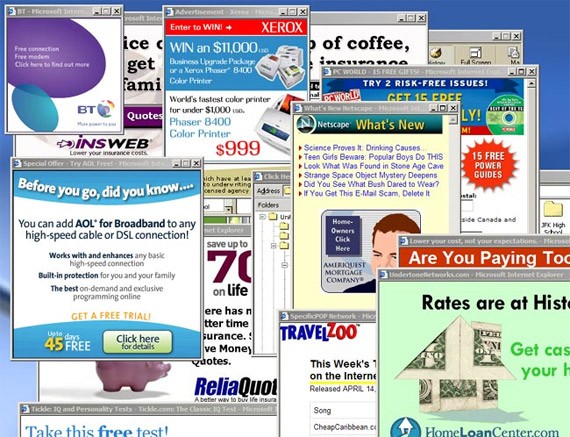
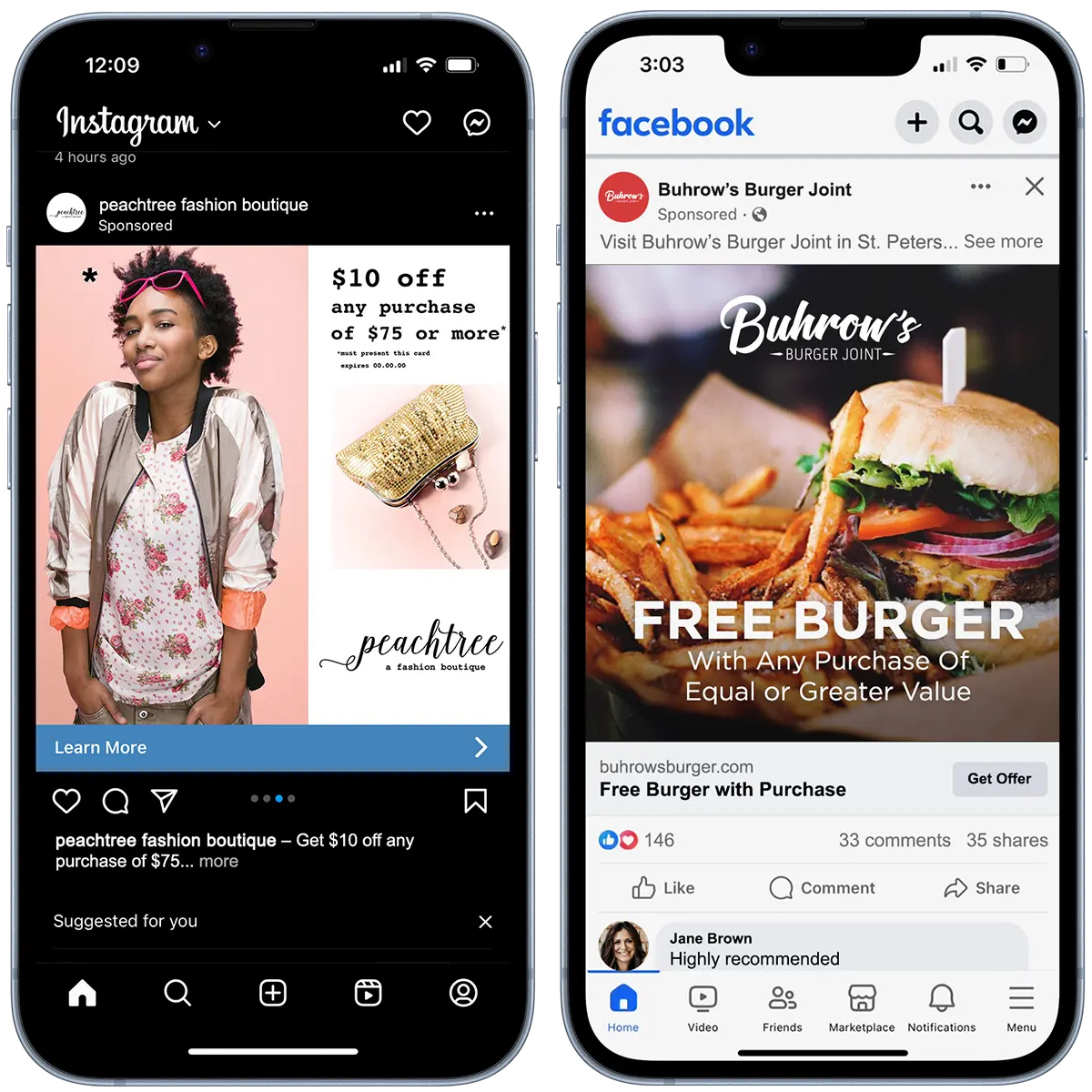
Online advertising remains a cornerstone of internet business models, driving both revenue and user growth. Any move toward subscription-based models must carefully balance financial sustainability with maintaining broad user access and a positive experience.
User Survey
Demographic Information and Subscription Service usage
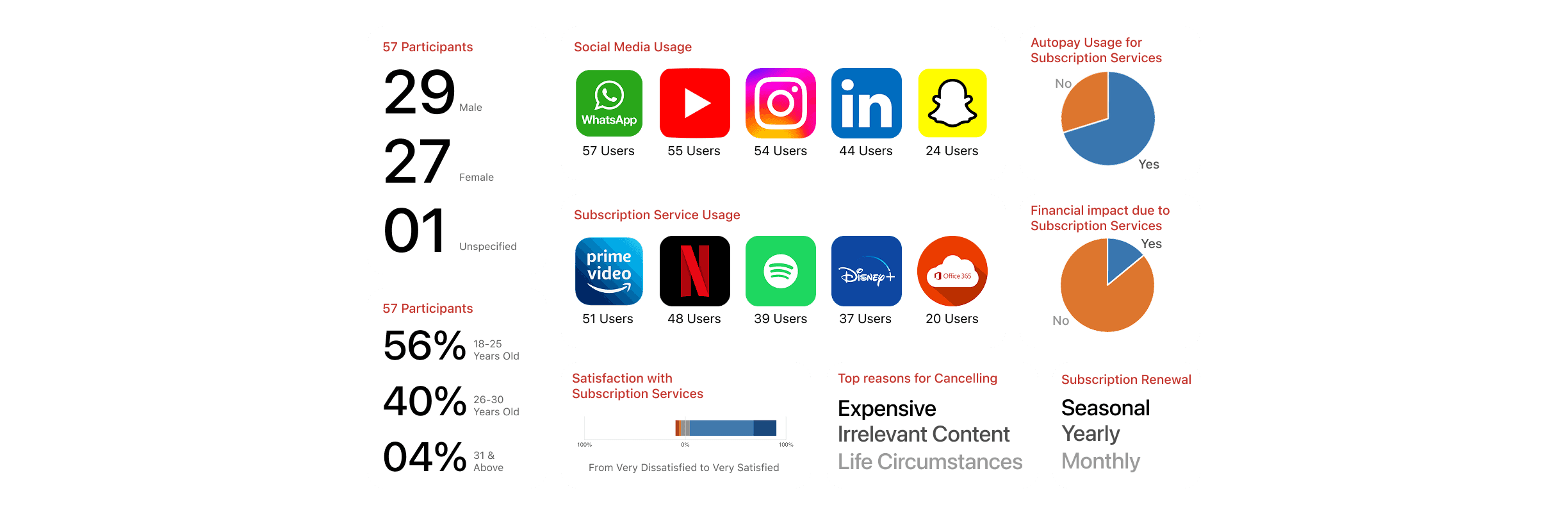
This survey aims to examine participants' social media and subscription usage, analyze user retention rates across platforms, investigate motivations for subscribing, and conduct an in-depth assessment of social media advertisements in terms of engagement and quality. The three main research goals are as follows,
01
Comparing User Retention Rate between Social Media and Subscription Services in the past 6 months.
02
Analyzing the user's motivation to subscribe to a paid service.
03
Studying user engagement with social media advertisements to understand the important of Ad relevancy and frequency.
Final Designs
Survey Findings
User Retention
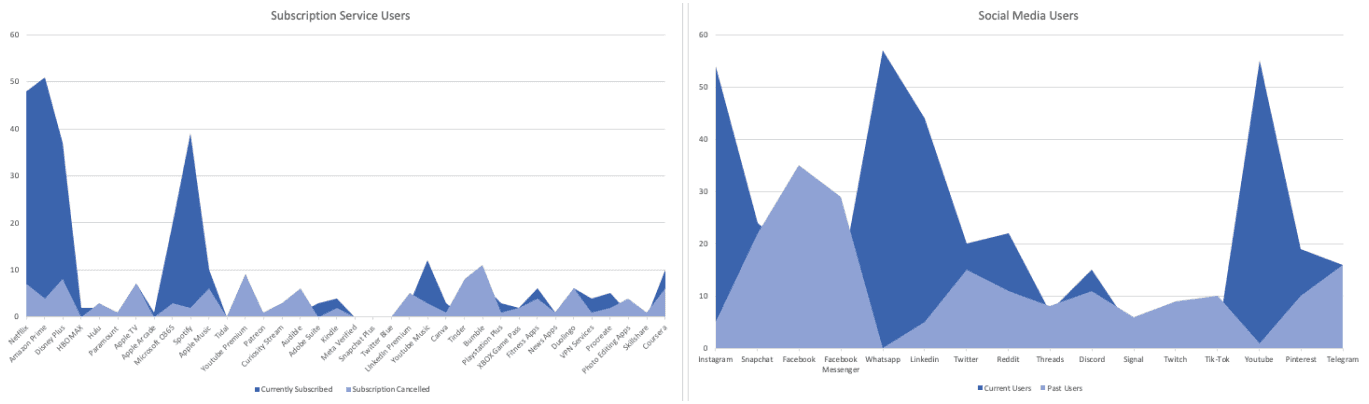
Comparing the number of current and past years in subscription services and social media applications show the rate of user retention between the platforms. Even though social media and subscription platforms have a high number of users, subscription services have far fewer past users in the last six months, yielding a higher retention rate than social media.


Subscription services with more than 10 users exhibit higher retention rates, while social media applications generally show lower retention and a higher number of former users than current users, with YouTube and WhatsApp as notable exceptions.
Survey Findings
Motivation to Subscribe
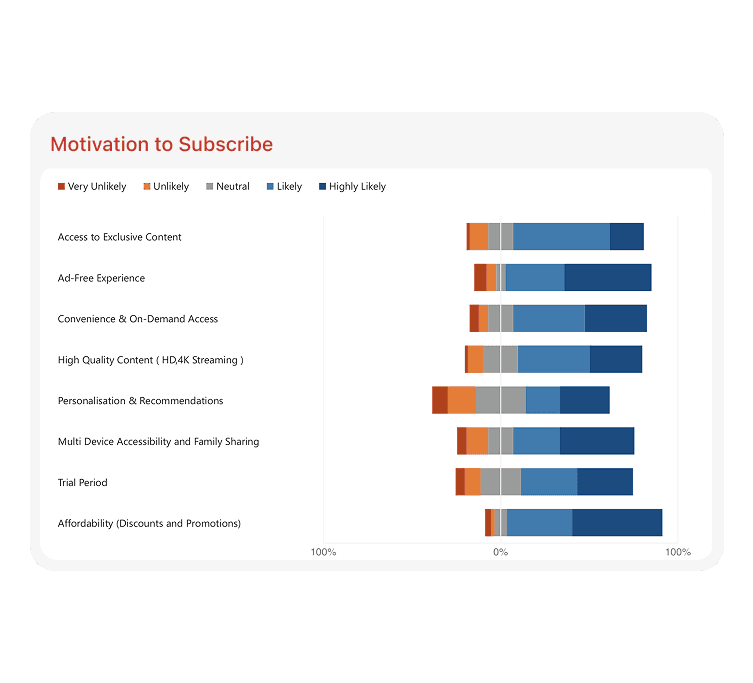
Participants generally responded positively to features that enhanced user experience, which contributed to higher subscription retention, while their views on personalization and recommendations were more neutral.
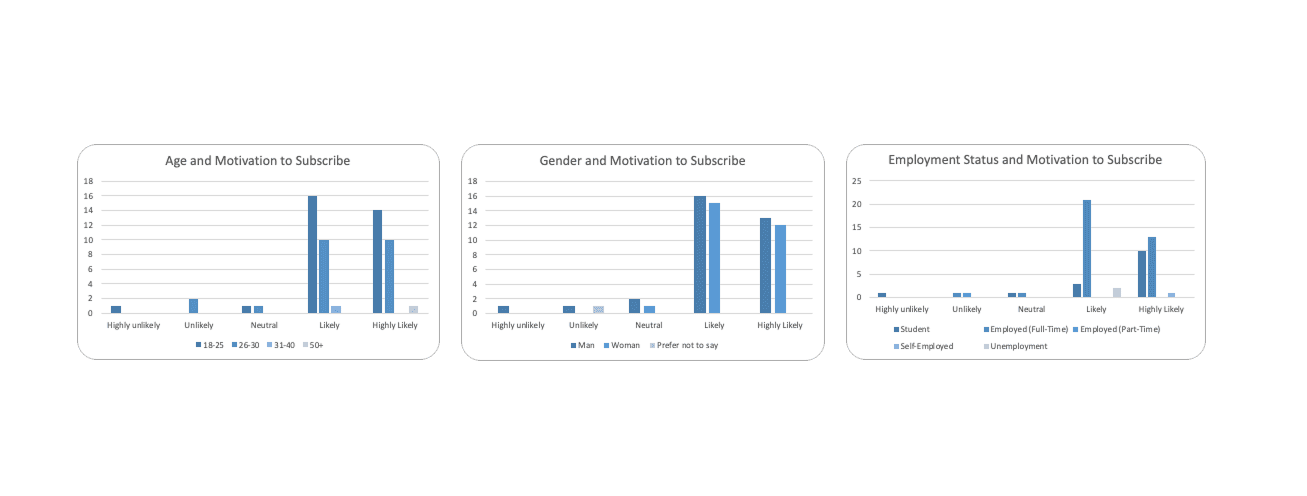
Further analysis of median responses to motivational factors across demographics showed that all motivations significantly impacted subscription likelihood regardless of age or gender, with employment status appearing slightly more relevant—though this may be influenced by a smaller sample size.
Survey Findings
Ad Frequency and Relevancy
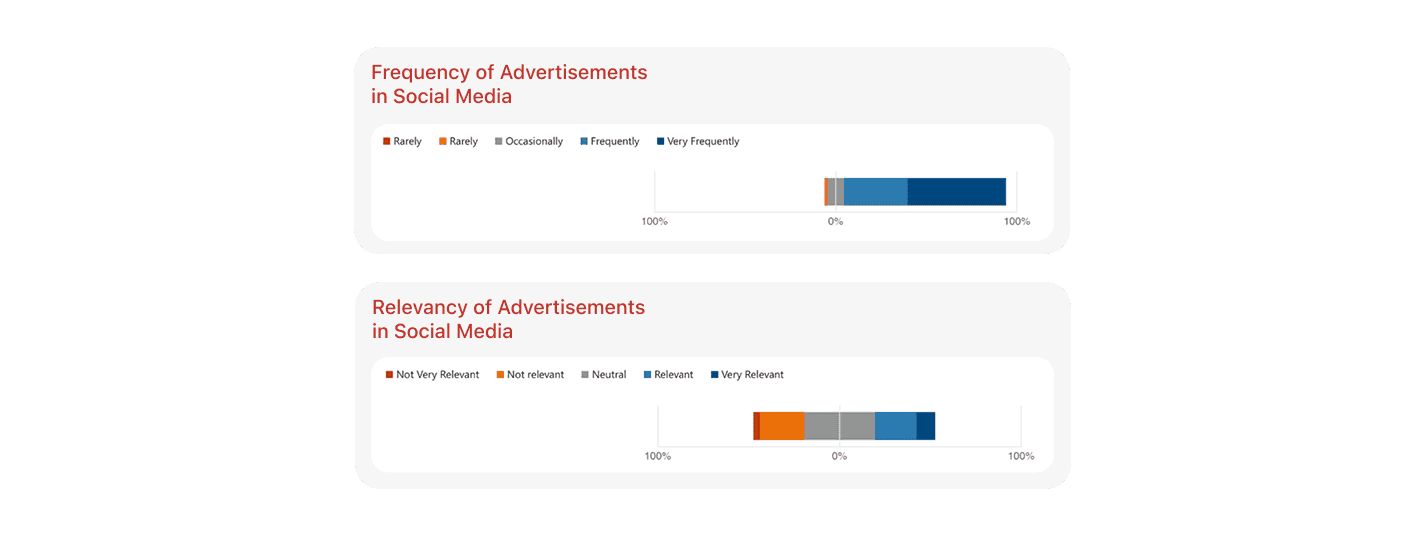
Personal anecdotes reveal a trend towards practicality and skepticism, where decision-making is influenced by necessity (the appeal of offers) and the ad’s ability to address brand trust issues. The effectiveness of an ad appears to be directly related to its personal relevance and the degree of personalization, indicating that users are more likely to engage with and purchase from ads that are tailored to their needs and interests.

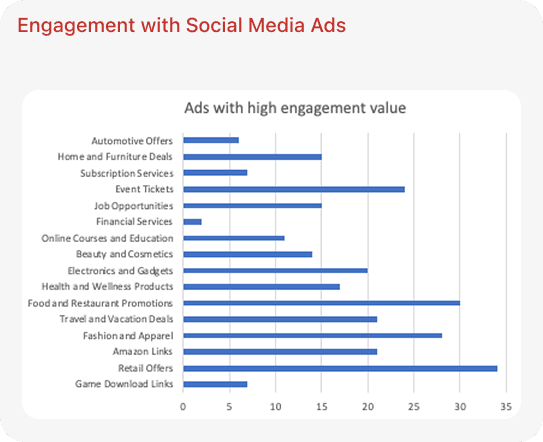
However, with the increase in social media use and ad frequency, the perceived relevance of ads has declined, suggesting a saturation point where the sheer volume of ads may diminish their overall impact unless they are highly personalized and directly relevant to the user's immediate needs and interests.
Survey Findings
Social Media Advertisements: Impact and Quality Assessment
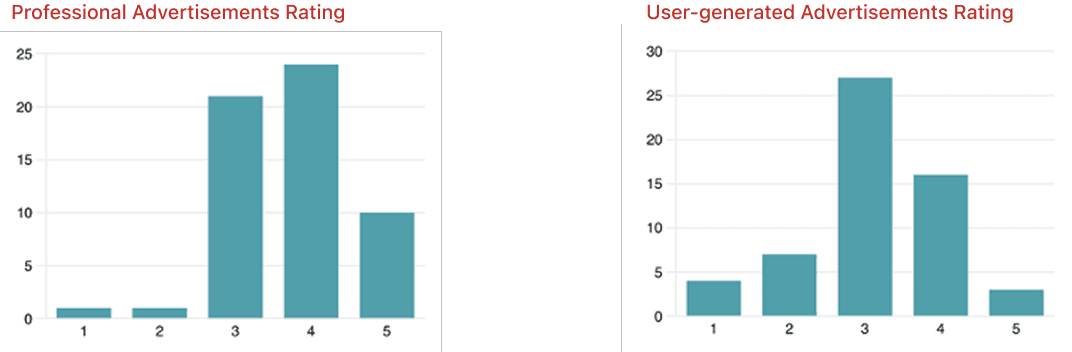
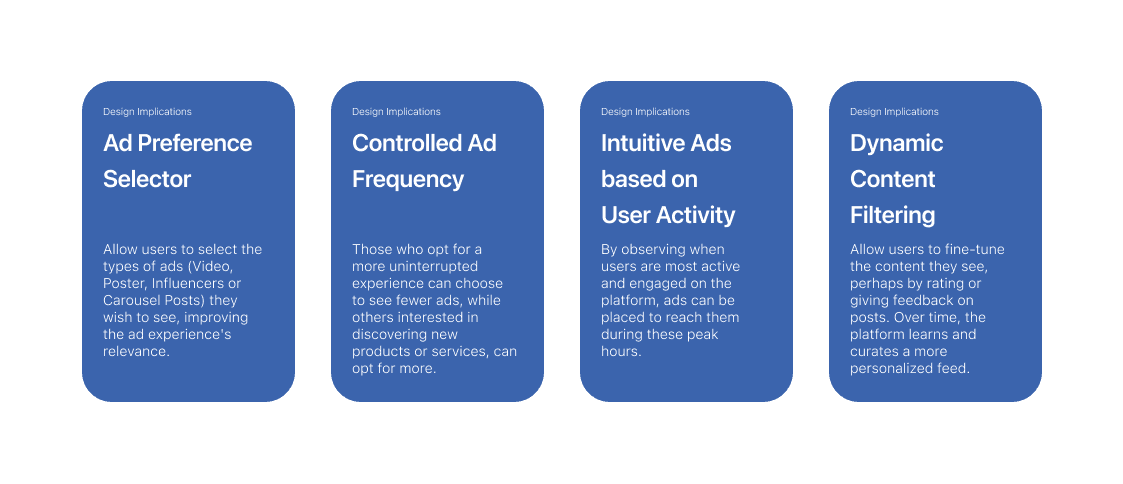
Users show a clear preference for video ads, followed by carousel and image ads, indicating that dynamic and visually engaging content is more effective at capturing attention.


However, the overall quality of ads—rated 3.72/5 for professional ads and 3.12/5 for user-generated content—reveals significant room for improvement. Despite 74% of users expecting high-quality ads given their time spent on platforms, nearly half report that low-quality ads negatively affect their experience.
Discussion
Social Media Ads - Identifying negative and positive imapcts
Despite high ad frequency, engagement remains low, with 88% of users skipping or scrolling past ads, indicating ad fatigue that reduces their impact and relevancy. Mixed perceptions of ad relevance—38.6% neutral and 24.6% finding ads irrelevant—highlight shortcomings in targeting effectiveness.
However, 75% of users find personalized ads helpful for product discovery, and 61% report making purchases influenced by social media ads. This suggests that despite challenges, well-executed ads continue to be a powerful driver of consumer behavior.
Outcome
Interplay of Revenue Model and UX Design
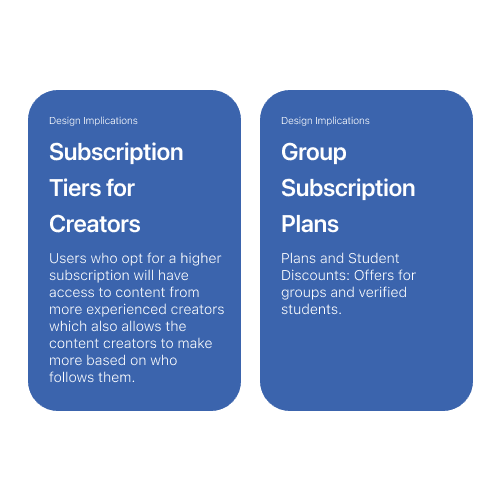
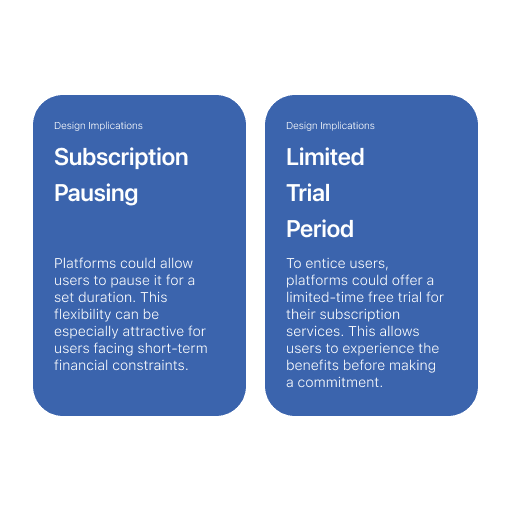
High subscriber counts on platforms like Netflix and Amazon Prime reflect strong demand for quality content, while the rise of subscription models such as Meta’s "verified" highlights growing user concerns about safety and data privacy. Future platforms must prioritize transparency, seamless ad integration, intuitive interfaces, user-friendly payment systems, and diverse content offerings to balance monetization with user satisfaction and deliver value across all subscription tiers.
Request access to view the full study and design implications.