Social media as a subscription service.
Conducted UX study and proposed design solutions for a subscription based social media
Tools used

Project Brief:
Master's dissertation done over 12 weeks. Completed at University of Nottingham as a part of the MSc Project module during the MSc HCI programme.
Project Type:
Investigate the feasibility of transitioning social media revenue models from ads to subscriptions, emphasising user experience dynamics by studying existing revenue models and analysing research gaps.
Duration:
3 months

Initial problem discovery.
Need for a subscription service?
Traditional ad-driven revenue models face scrutiny due to privacy issues and misinformation.
Traditional ad-driven revenue models face scrutiny due to privacy issues and misinformation. This has paved the way for the emerging subscription-based monetization model.
In the current landscape of growing user numbers and increased corporate participation in social media marketing, it is essential to examine the impact of ad relevancy and user interaction. This analysis is vital for gaining valuable insights to enhance the business model, ultimately benefiting both social media platform users and companies investing in advertising.



Understanding implications of transition:
Understanding the implications of transition from ad-based to subscription-based models is vital for varios stakeholders.
Influence of revenue model on UX:
The revenue model directly influences the user experience design of social media applications. Grasping this relationship is pivotal for creating intuitive user centric platforms while ensuring sustainable monetisation.
Insight for content creation
Providing insights for creation of advertisements based on user preferences. Understanding the impact of advertisement relevancy is vital in ensuring maximum reach of ads. This approach ensures ads effectively translate into actual purchases and optimize outcomes for businesses.
Research
Evolution of online advertising.
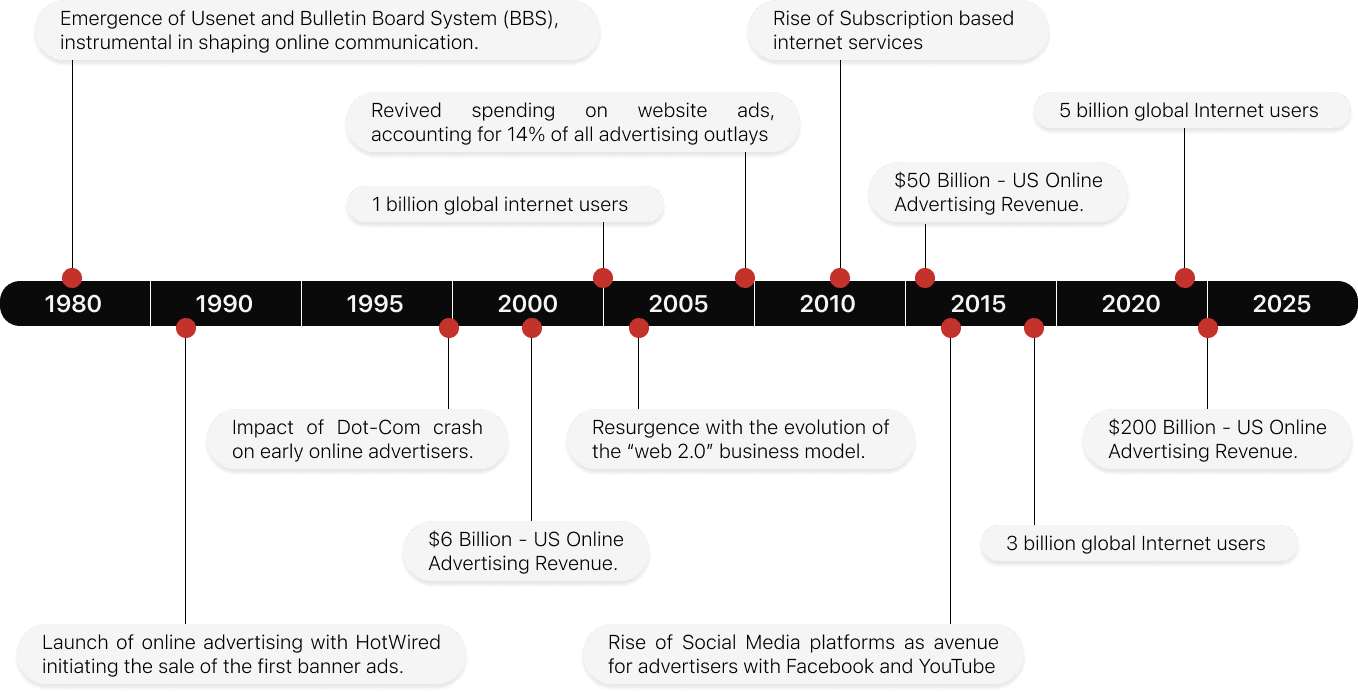
Research Background
study evolution of the internet, emphasising the rise of social media, and the ad-based revenue model.
The Challenge
Balancing revenue generation with positive user experience.
Research Questions
Impact of subscription models on engagement and content?
Addressing challenges of Inclusivity, affordability, and accessibility through improved UX.
User surveys.
Making sense of all the data.
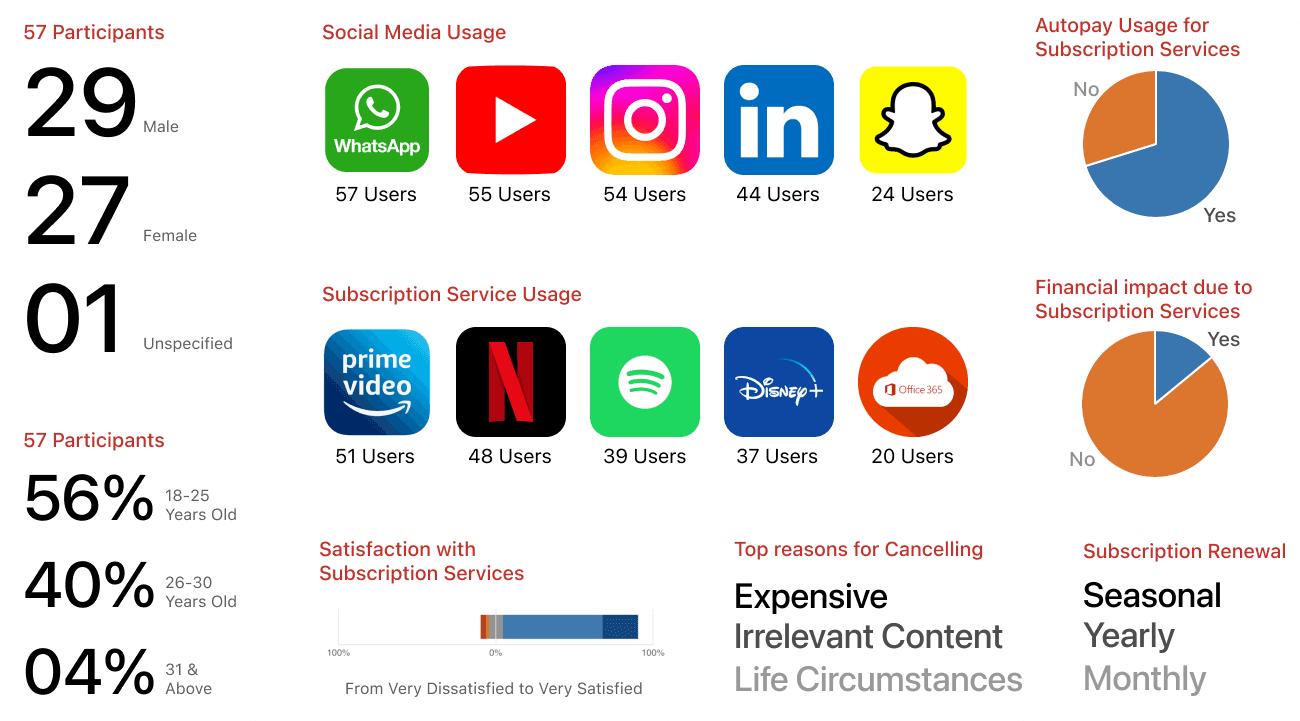
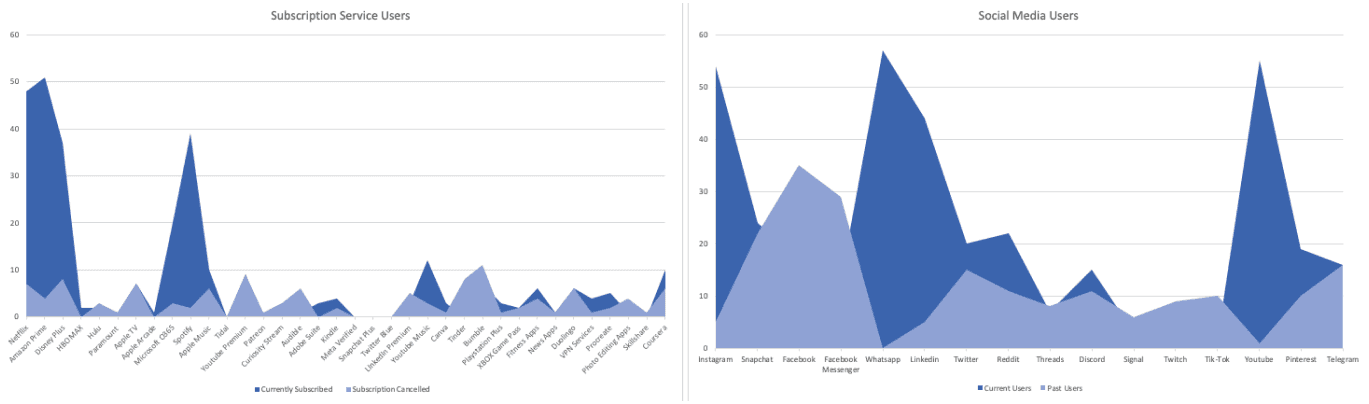
Higher user retention rate in subscription services.
Comparing the number of current and past years in subscription services and social media applications show the rate of user retention between the platforms. Even though social media and subscription platforms have a high number of users, subscription services have far fewer past users in the last six months, yielding a higher retention rate than social media.
Data analysis.
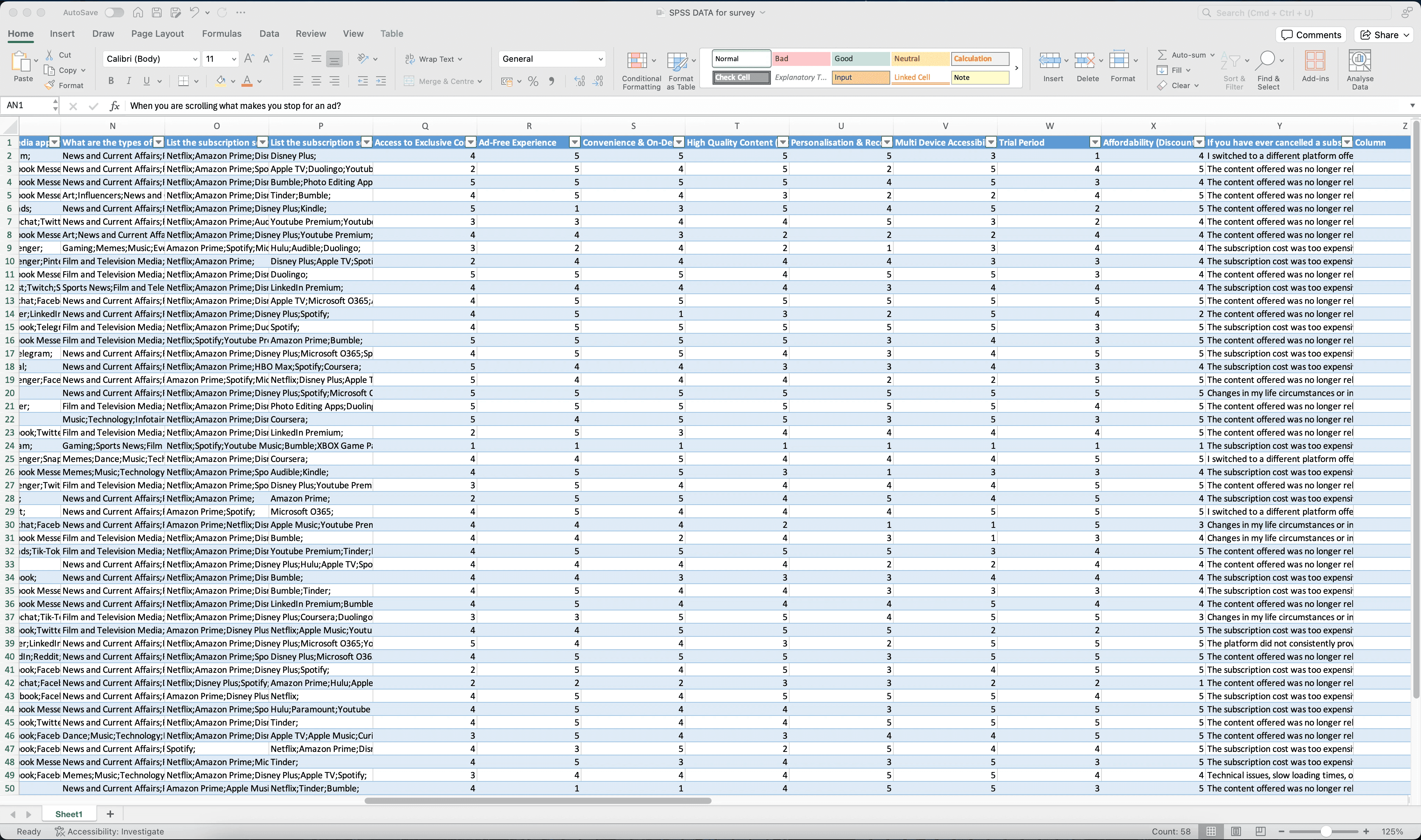
Using SPSS
To understand these preferences, an analysis incorporating age, gender, and employment status was performed using cross-tabulation. This aimed to reveal the influence of demographic and socio-economic factors on subscription behaviors and preferences.
Further investigation involved analyzing median responses to motivational factors across demographics, showing that all factors significantly impacted the likelihood of subscription across age, gender, and employment status.
User surveys.
Social Media Advertisements: Insights and Engagement.
Current trends.
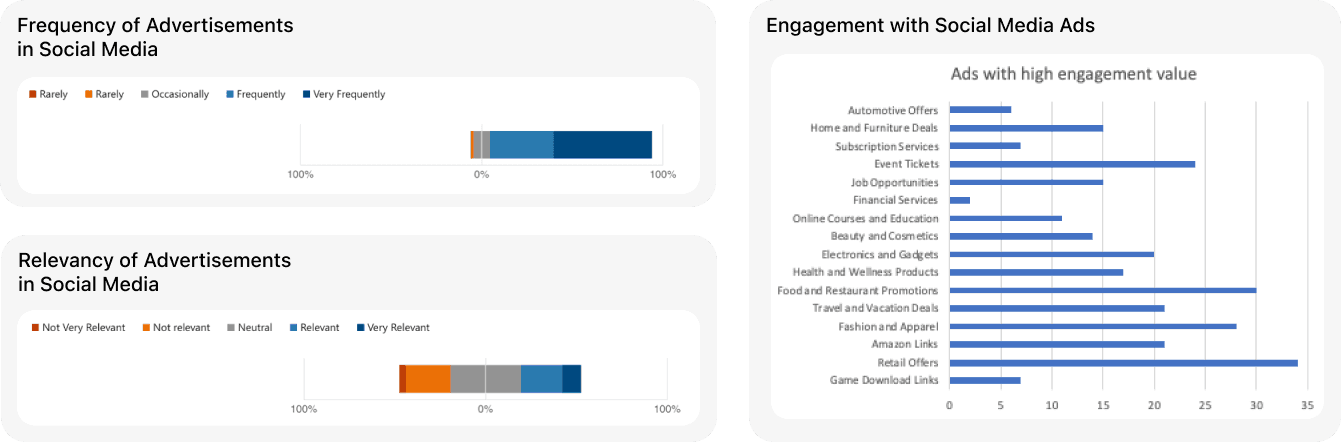
Personal anecdotes reveal a trend towards practicality and skepticism, where decision-making is influenced by necessity (the appeal of offers) and the ad’s ability to address brand trust issues. The effectiveness of an ad appears to be directly related to its personal relevance and the degree of personalization, indicating that users are more likely to engage with and purchase from ads that are tailored to their needs and interests.
Irrelevant ads.
However, with the increase in social media use and ad frequency, the perceived relevance of ads has declined, suggesting a saturation point where the sheer volume of ads may diminish their overall impact unless they are highly personalized and directly relevant to the user's immediate needs and interests.
User surveys.
Social Media Advertisements: Impact and Quality Assessment
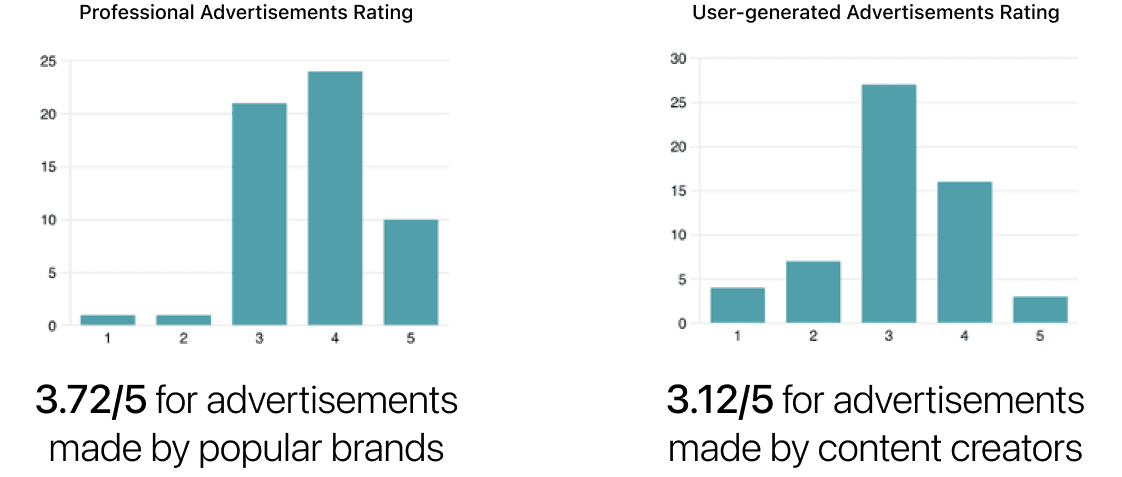
Users show a clear preference for video ads, followed by carousel and image ads, suggesting that dynamic and visually engaging content has a higher potential for capturing attention. However, the quality of ads, rated at 3.72/5 for professional ads and 3.12/5 for user-generated content, indicates room for improvement.
This is underscored by the fact that 74% of users expect high-quality ads due to the time they spend on platforms, yet nearly half of the users report that low-quality ads negatively impact their user experience.
User surveys.
Social Media Advertisements: Identifying negative and positive impacts.



High Ad Frequency and Low Engagement:
Despite this high frequency, engagement is remarkably low, with 88% of users choosing to skip or scroll past ads.
This suggests that the sheer volume of ads contributes to ad fatigue, diminishing their overall impact and relevancy.
Low Relevance and Personalisation:
The mixed views on ad relevance, with 38.6% of users feeling neutral and 24.6% finding ads "not relevant", point to a significant issue in targeting effectiveness.
While 75% of users found personalised ads helpful in product discovery, the lack of relevance for a considerable user segment indicates a gap in personalisation algorithms or data insights leveraged for ad targeting.
High Purchasing Influence:
Despite the challenges, social media ads have a significant impact on purchasing behaviour, with 61% of users making purchases influenced by such ads.
This indicates that while there are issues with the current ad-based model, it remains a potent tool for influencing consumer behaviour when executed effectively.
Copyright 2024, Seshanth Sharav
All works displayed are my original creations and are protected by copyright law.